
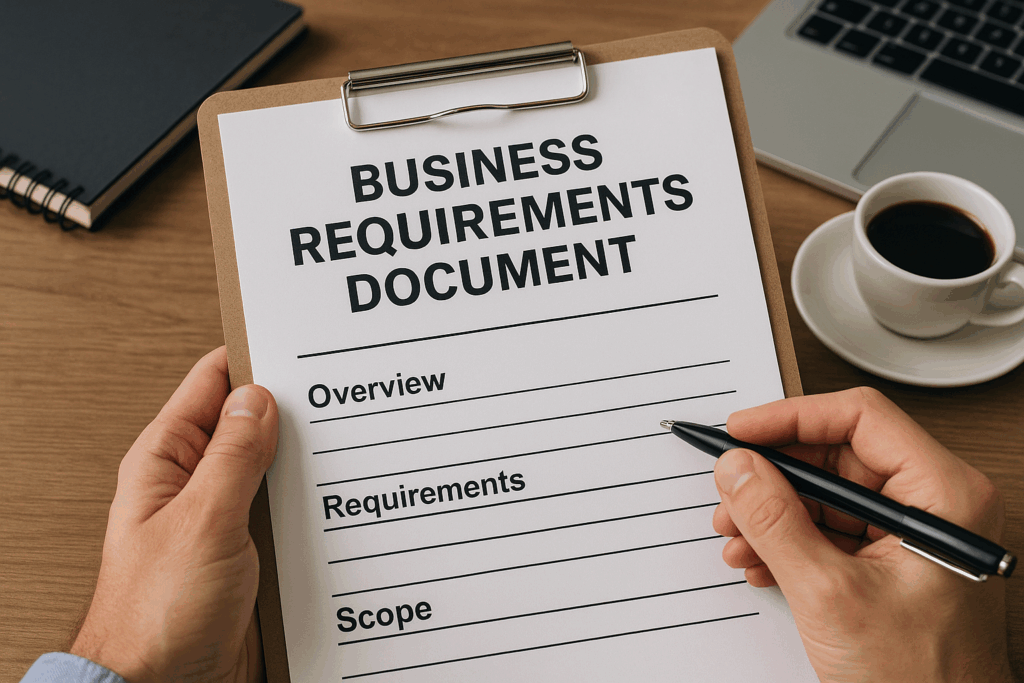
A business requirements document is one of the most important documents in any project. Whether you are creating a business application, launching a new service, or improving internal operations, a strong requirements document provides the foundation for project success. It helps stakeholders understand the project, align business goals, and define the project scope before development begins.
A well-written BRD ensures everyone involved has the same understanding of the project requirements, expected benefits, and objectives and scope. From project managers to subject matter experts, the business requirements document acts as a shared source of information throughout the project lifecycle.
In this guide, you will learn how to create an effective business requirements document, review a practical requirements document template, and explore tips for writing clear and actionable requirements.
Key Takeaways
- A business requirements document (BRD) aligns stakeholders, defines project scope, and supports project success.
- Clear requirements help prevent scope creep, reduce confusion, and improve communication across teams.
- Effective BRDs include stakeholder analysis, functional requirements, KPIs, risks, and success metrics.
- Strong collaboration, structured templates, and regular reviews improve the quality of requirements documentation.
- Well-written BRDs help organizations achieve better project outcomes and long-term business value.
What Is a Business Requirements Document?
A business requirements document (BRD) is a formal document that outlines business requirements, project objectives, stakeholder expectations, and the outcomes the project should achieve. The document explains what the project will address, why it matters to the organization, and how success will be measured.
The primary purpose of a business requirements document is to bridge the gap between business strategy and technical execution. A BRD helps key stakeholders understand the project and ensures that project requirements remain aligned with business goals.
An effective business requirements document typically includes:
- An executive summary
- Project scope and objectives
- Stakeholder analysis
- Functional requirements
- Functional and non-functional requirements
- Business rules and use cases
- Key performance indicators
- Assumptions, risks, and constraints
- Success metrics and expected ROI
Organizations rely on business requirements documents to reduce confusion, prevent scope creep, and improve project management. When requirements are clearly documented, teams can avoid costly misunderstandings and support successful project execution.
Why a Requirements Document Matters
Every successful project begins with clear requirements. A detailed requirements document provides structure and direction for stakeholders, developers, and business analysts.
Without a proper requirements document, teams may struggle with unclear goals, inconsistent communication, and changing priorities. A BRD helps avoid these challenges by establishing a shared understanding of project objectives and stakeholder expectations.
A business requirements document also supports:
- Better communication between technical and business teams
- Stronger stakeholder analysis and collaboration
- More accurate project management and planning
- Better cost-benefit analysis and return on investment evaluation
- Improved training and onboarding for team members
- Consistent information for everyone involved
By documenting business requirements early, organizations create a reliable foundation for project success.
Key Components of a Business Requirements Document
A complete business requirements document contains several sections that define the project, explain the process, and outline expected outcomes.
Executive Summary
The executive summary provides a high-level overview of the project. This section explains the business objectives, business strategy, and expected benefits of the initiative.
An executive summary should briefly cover:
- The reason for the project
- Key stakeholders and partners
- Expected ROI and return on investment
- Business goals and project objectives
- Major project requirements
This section allows leadership teams and stakeholders to quickly understand the value of the project.
Project Scope
The project scope defines the boundaries of the project and explains what the project will address. A clearly defined project scope helps teams avoid scope creep and maintain focus throughout the project.
The scope section should include:
- Objectives and scope
- Deliverables and timelines
- Included and excluded features
- Risks and assumptions
- Dependencies and constraints
Clearly documenting scope improves management and helps stakeholders stay aligned.
Stakeholder Analysis
Stakeholder analysis identifies the people and groups affected by the project. This process ensures that everyone involved understands their responsibilities.
A stakeholder analysis may include:
- Key stakeholders
- Project managers
- Subject matter experts
- Business analyst roles
- External partners
- End users and customers
Strong stakeholder analysis improves communication and supports effective business collaboration.
Functional Requirements
Functional requirements explain how the system or process should operate. These requirements describe features, workflows, and use cases.
Examples of functional requirements include:
- User authentication and permissions
- Data entry and reporting capabilities
- Integration with Slack and Microsoft tools
- Notification and approval workflows
- Customer stories and user scenarios
Functional requirements should be specific, measurable, and based on business needs.
Non-Functional Requirements
Non-functional requirements define performance, usability, and security standards.
Examples include:
- System response time
- Scalability requirements
- Accessibility standards
- Security and compliance measures
- Reliability and uptime goals
Functional and non-functional requirements work together to ensure a complete understanding of project expectations.
Business Rules and Use Cases
Business rules define how the organization operates and how the project should support those rules.
Use cases describe how users interact with the system. Effective use cases provide real-world examples that help stakeholders understand workflows and outcomes.
Examples may include:
- Approval process use cases
- Customer service use cases
- Financial reporting use cases
- Employee onboarding cases
These examples help teams understand project requirements and expected functionality.
Success Metrics and KPIs
A business requirements document should define measurable goals and key performance indicators.
Examples include:
- Increased efficiency
- Reduced operational costs
- Improved customer satisfaction
- Faster training completion
- Better return on investment
These goals help organizations evaluate project success after implementation.
How to Create an Effective Business Requirements Document
Creating a business requirements document requires planning, collaboration, and research. The following best practices can help teams develop an effective business requirements document.
1. Start With Business Goals
Before writing a BRD, define the business goals and project objectives. Teams should understand the business strategy, expected benefits, and desired outcomes.
Ask questions such as:
- What problem does this project solve?
- What outcomes the project should deliver?
- How will the organization measure success?
- What is the expected ROI?
This information ensures that the requirements document remains aligned with organizational priorities.
2. Gather Information From Stakeholders
Successful business analysis depends on accurate information gathering. Interview stakeholders, review existing documents, and collect customer stories to understand needs and expectations.
Teams often gather information through:
- Workshops and interviews
- Surveys and questionnaires
- Observation and process analysis
- Existing requirements documents
- Input from subject matter experts
Strong collaboration improves the quality of business requirements.
3. Use a Clear Template
Using a template helps organizations standardize business requirements documents and improve consistency.
A BRD template or requirements document template should include:
- Title page
- Executive summary
- Project scope
- Stakeholder analysis
- Functional requirements
- Non-functional requirements
- Success criteria
- Risks and assumptions
- Approval section
Many organizations use free business requirements templates to accelerate the documentation process.
4. Define Requirements Clearly
Requirements should be easy to understand and actionable. Avoid vague statements and overly technical language.
Effective business requirements are:
- Specific
- Measurable
- Achievable
- Relevant
- Time-based
A business analyst often writes the BRD and ensures that requirements remain clear for both technical and non-technical audiences.
5. Include Visual Elements
Charts, diagrams, and process maps can improve understanding and simplify complex information.
Visual aids may include:
- Workflow diagrams
- Organizational charts
- Data flow diagrams
- Timeline visuals
- Use cases and process maps
These visuals help stakeholders understand the project and improve communication.
6. Review and Update the Document
A requirements document should evolve throughout the project. Teams should review the document regularly and update requirements when business needs change.
Version control and stakeholder approvals help maintain accuracy and accountability.
Requirements Document Templates and Examples
Organizations often rely on requirements document templates to streamline documentation.
Popular requirements document templates include:
- Software implementation template
- Product development template
- Process improvement template
- Compliance documentation template
- Training program template
A strong template provides a repeatable structure that improves management and efficiency.
Sample BRD Template Structure
Project Overview
- Project name
- Business objectives
- Stakeholders and partners
- Expected benefits
Requirements Section
- Functional requirements
- Non-functional requirements
- Use cases
- Business rules
Project Management Details
- Scope and timeline
- Risks and assumptions
- Dependencies
- Key performance indicators
Approval Section
- Stakeholder approvals
- Version history
- Review dates
Using a requirements document template reduces errors and improves consistency across documents.
The Role of the Business Analyst
A business analyst plays a central role in creating a business requirements document. In many organizations, the business analyst writes the BRD, coordinates stakeholder meetings, and validates requirements.
Responsibilities often include:
- Conducting business analysis
- Gathering information from stakeholders
- Defining project requirements
- Facilitating stakeholder analysis
- Supporting project management activities
- Documenting customer stories and workflows
The business analyst helps ensure that business requirements align with organizational goals and project objectives.
Common Challenges When Writing a BRD
Even experienced teams can face challenges when creating a business requirements document.
Unclear Requirements
Vague requirements often lead to confusion and delays. Teams should define requirements clearly and provide examples whenever possible.
Scope Creep
Scope creep occurs when additional requirements are added without proper review. Clearly defining project scope helps organizations avoid uncontrolled changes.
Poor Communication
Miscommunication between stakeholders and technical teams can affect project success. Regular meetings and clear documentation improve collaboration.
Lack of Stakeholder Input
Ignoring feedback from stakeholders may result in missed requirements or unrealistic expectations.
Inconsistent Documentation
Without a template or standards, documents may become difficult to review and maintain.
Agile vs. Waterfall Approaches
The role of a business requirements document may vary depending on the project methodology.
Waterfall Methodology
In Waterfall environments, the BRD is usually completed before development begins.
This approach focuses on:
- Detailed requirements
- Fixed scope
- Extensive planning
- Formal approvals
Waterfall projects often rely heavily on comprehensive requirements documents.
Agile Methodology
Agile teams use lighter documentation and iterative planning.
Agile approaches may include:
- Customer stories
- Sprint planning
- Continuous feedback
- Flexible scope
Although Agile teams create fewer formal documents, business requirements remain essential for successful project outcomes.
Best Practices for Writing an Effective Business Requirements Document
The following tips can help organizations create more effective business requirements documents.
Focus on Business Value
Requirements should support business goals and measurable outcomes.
Collaborate With Stakeholders
Include key stakeholders throughout the project to improve alignment and communication.
Keep Requirements Organized
A structured template makes the document easier to review and maintain.
Use Consistent Language
Consistent terminology improves understanding across teams.
Validate Requirements Early
Review requirements with stakeholders before development begins.
Support Future Training
Well-written documents can support future training and onboarding initiatives.
The Future of Business Requirements Documentation
Modern organizations increasingly use AI tools, automation, and collaborative platforms to improve business analysis and documentation.
AI can help teams:
- Organize information faster
- Improve analysis and reporting
- Automate document updates
- Enhance collaboration
- Identify gaps in requirements
Cloud-based platforms also allow teams to collaborate in real time using tools like Slack and Microsoft applications.
As technology evolves, organizations will continue creating a business requirements document that balances flexibility, collaboration, and detailed planning.
Final Thoughts
A business requirements document is an essential tool for project success. It provides a clear framework for defining business requirements, managing stakeholder expectations, and supporting effective project management.
By using a structured template, gathering accurate information, and collaborating with stakeholders, organizations can create effective business requirements documents that align with business strategy and project objectives.
Whether you are creating a business initiative, improving internal processes, or launching new features, a strong BRD helps teams stay aligned throughout the project lifecycle.
Organizations that invest time in business analysis, requirements gathering, and stakeholder communication are far more likely to achieve successful project outcomes and long-term business value.
Experience the power of clear, compelling communication by reaching out to TimelyText today for professional technical writing, requirements documents, and business analysis support tailored to your organization’s goals.
- About the Author
- Latest Posts

I’m a storyteller!
Exactly how I’ve told stories has changed through the years, going from writing college basketball analysis in the pages of a newspaper to now, telling the stories of the people of TimelyText. Nowadays, that means helping a talented technical writer land a new gig by laying out their skills, or even a quick blog post about a neat project one of our instructional designers is finishing in pharma.


